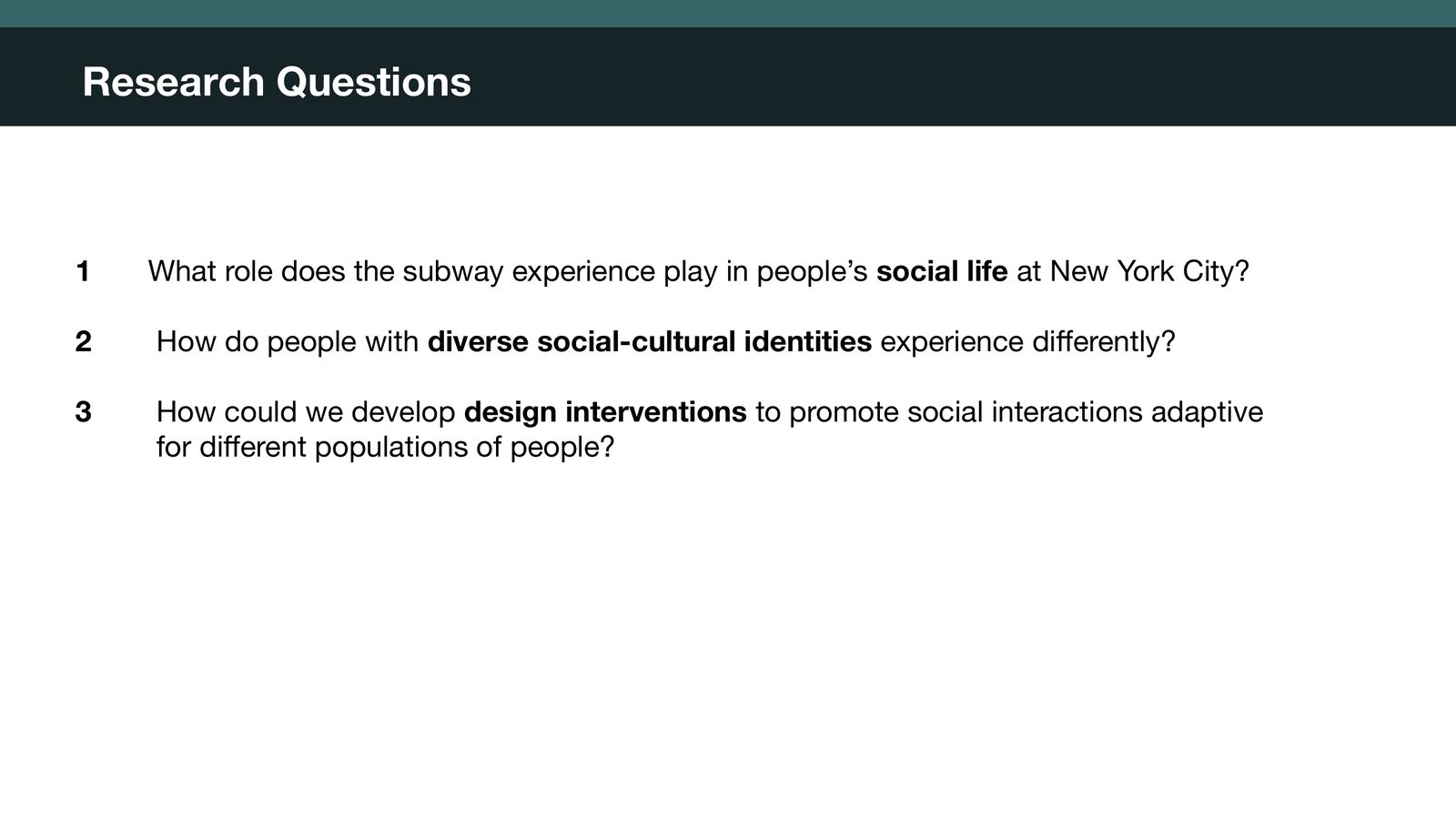
Millions of New Yorkers share a subway car every day, yet most ride alone together. We asked how the subway shapes people’s social lives in the city, and how design could make room for small moments of connection without forcing them.
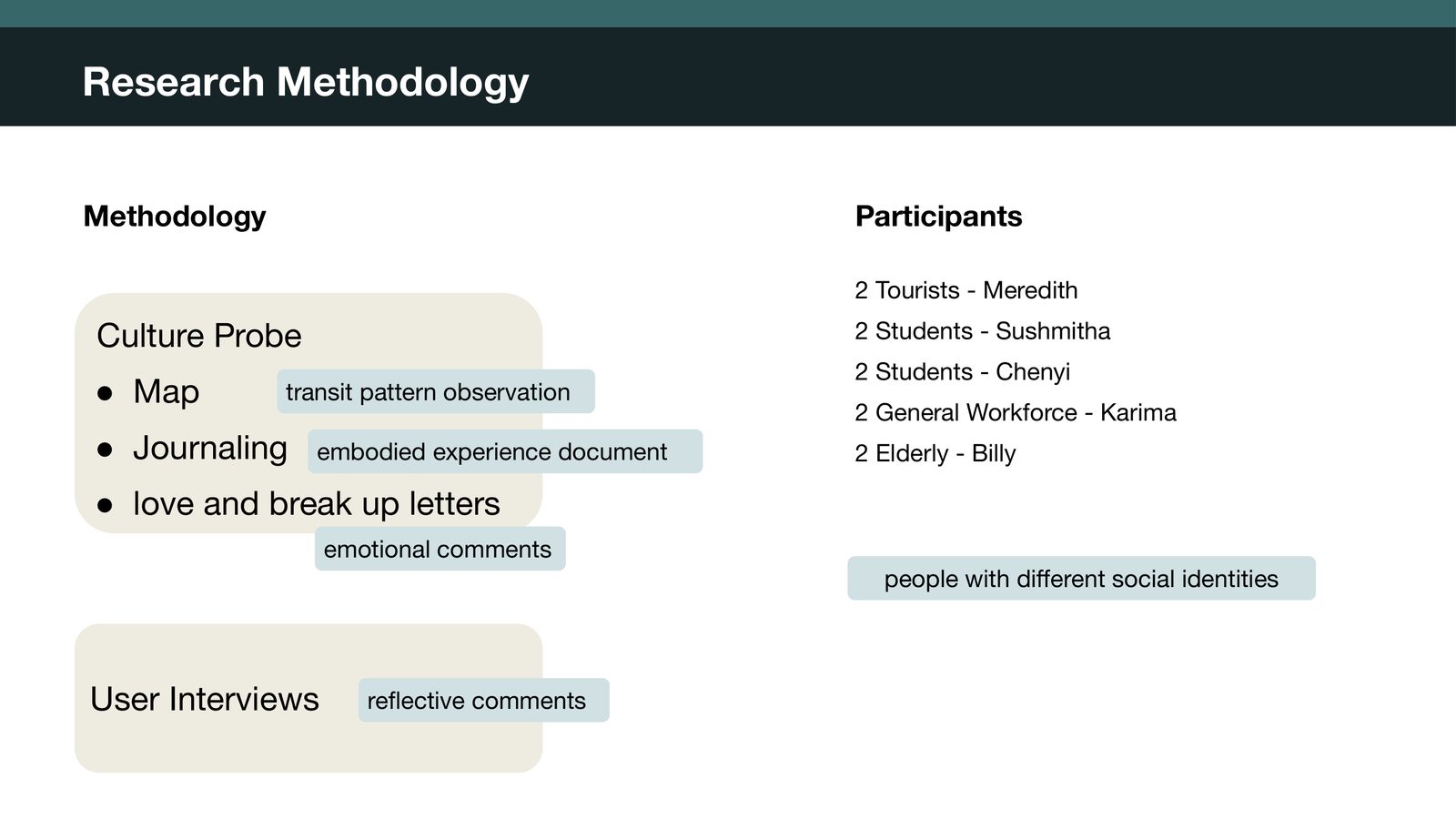
We combined culture probes with interviews of ten riders: students, workers, older adults, and tourists.
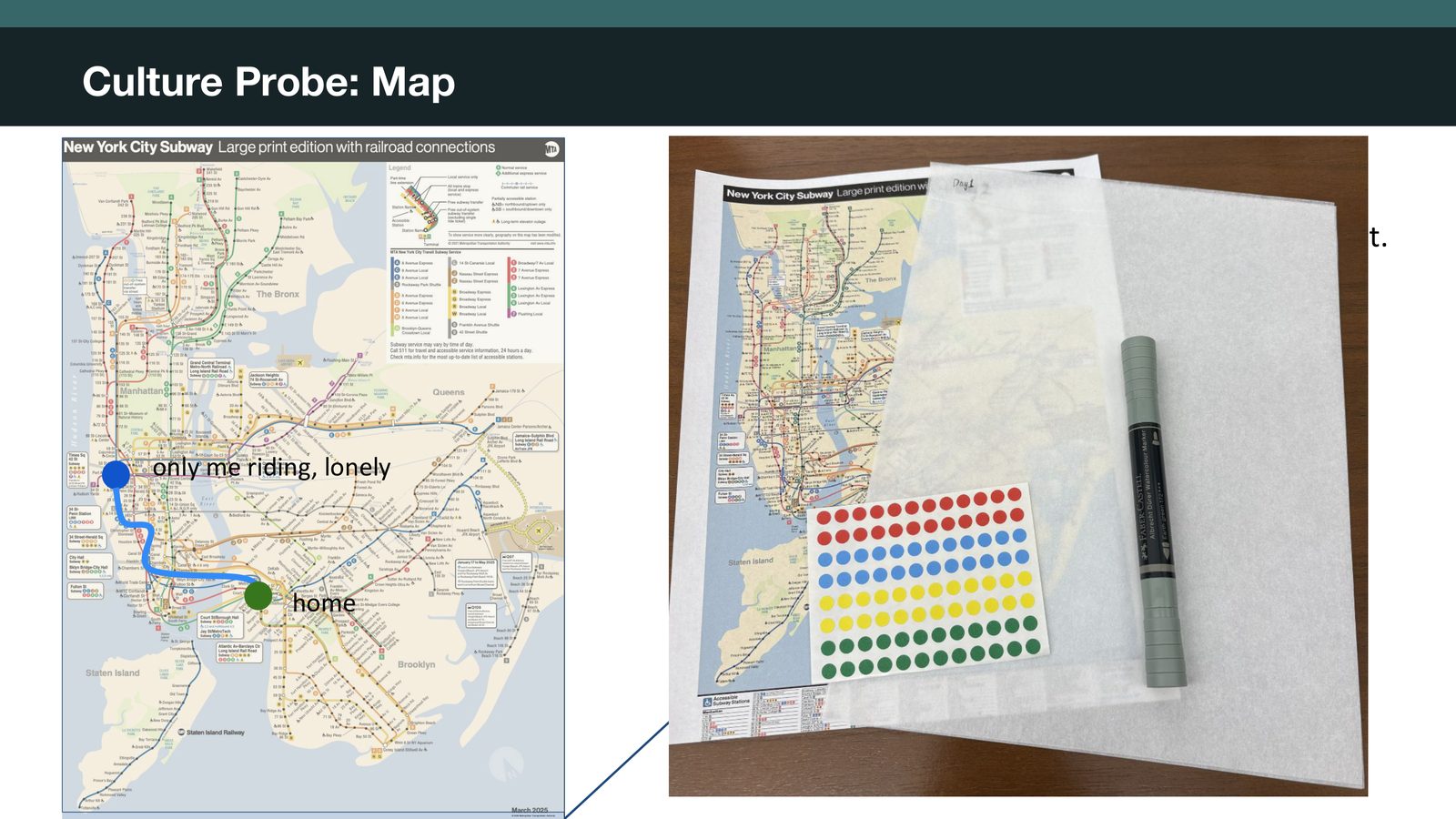
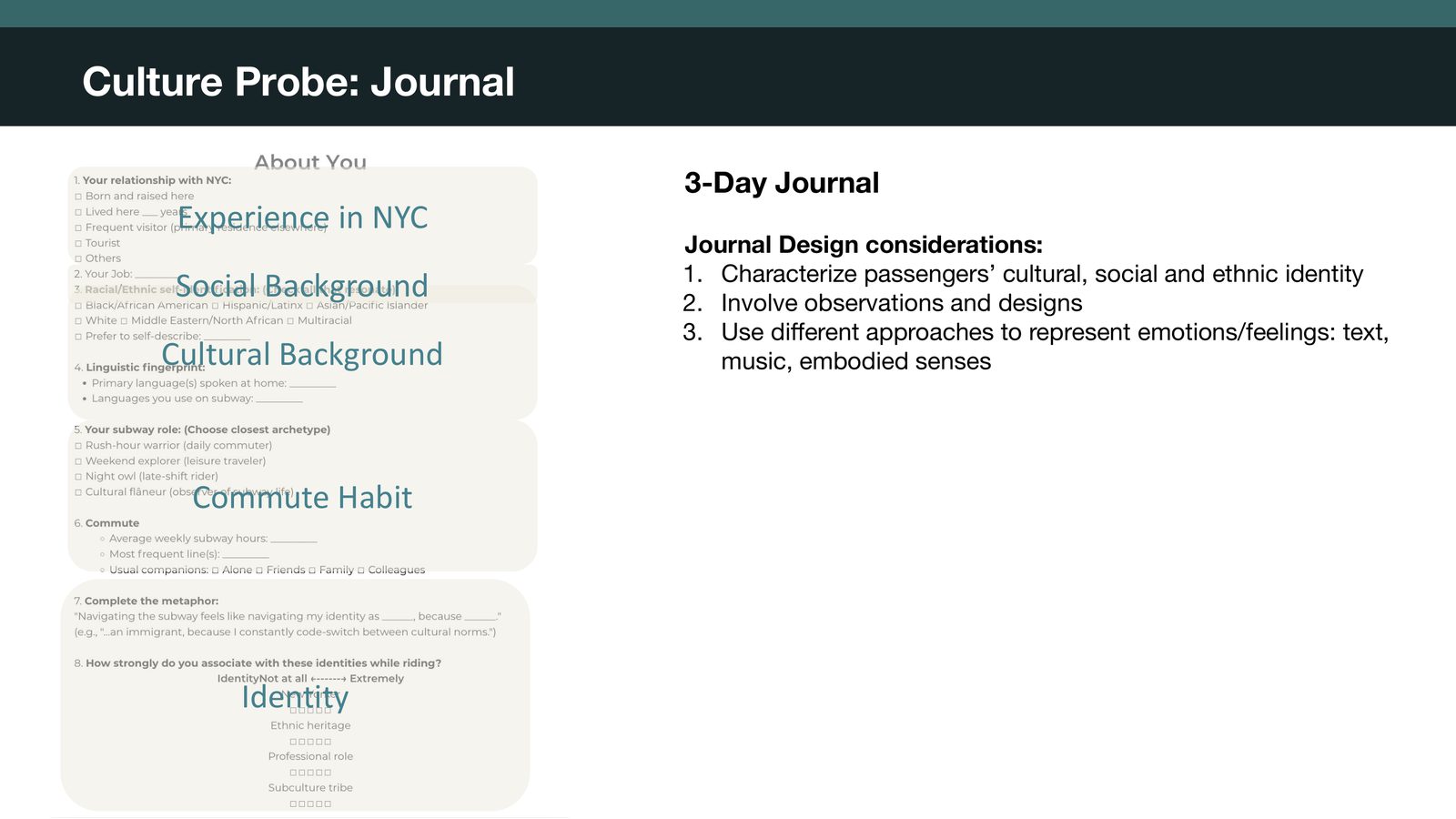
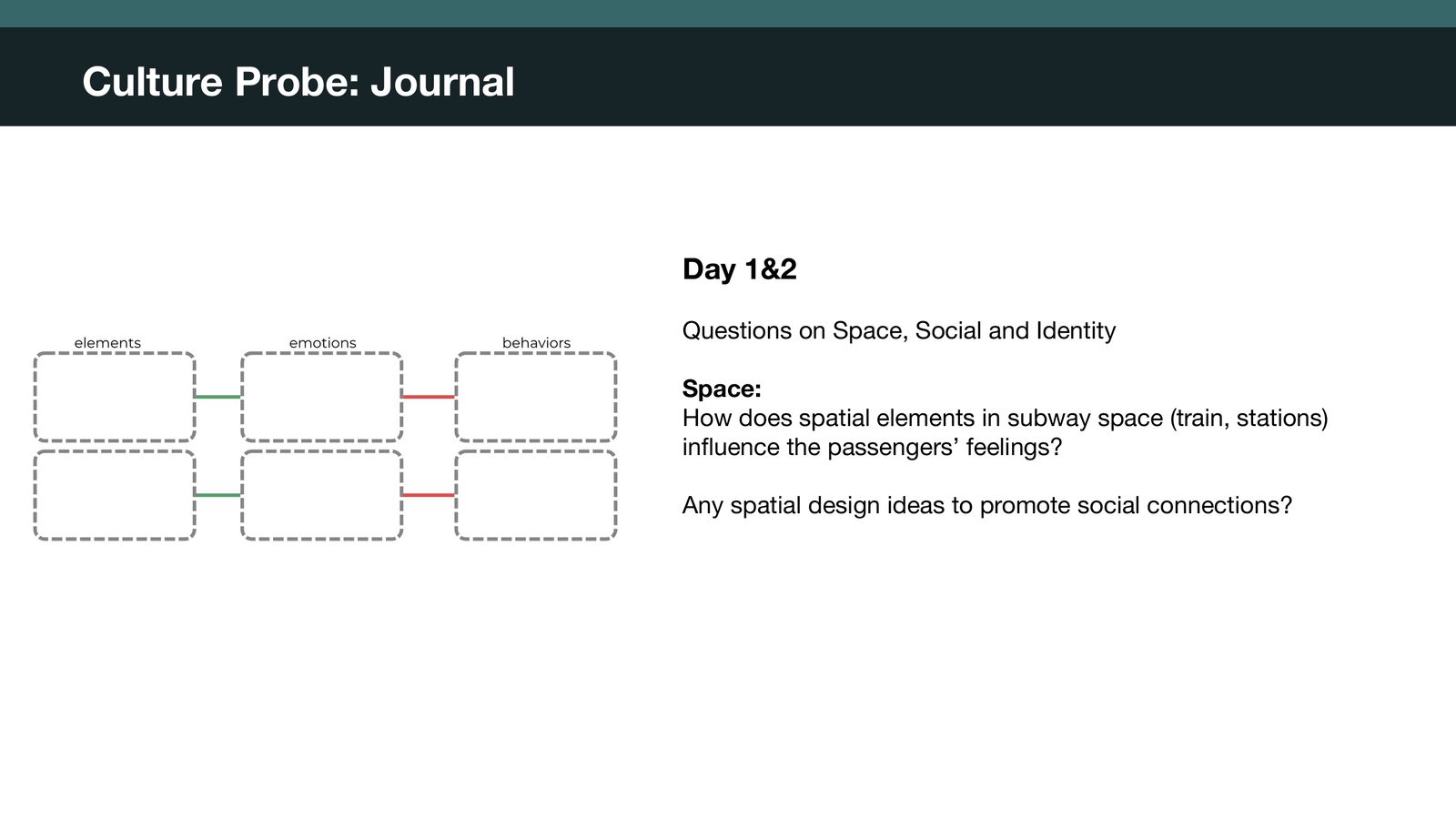
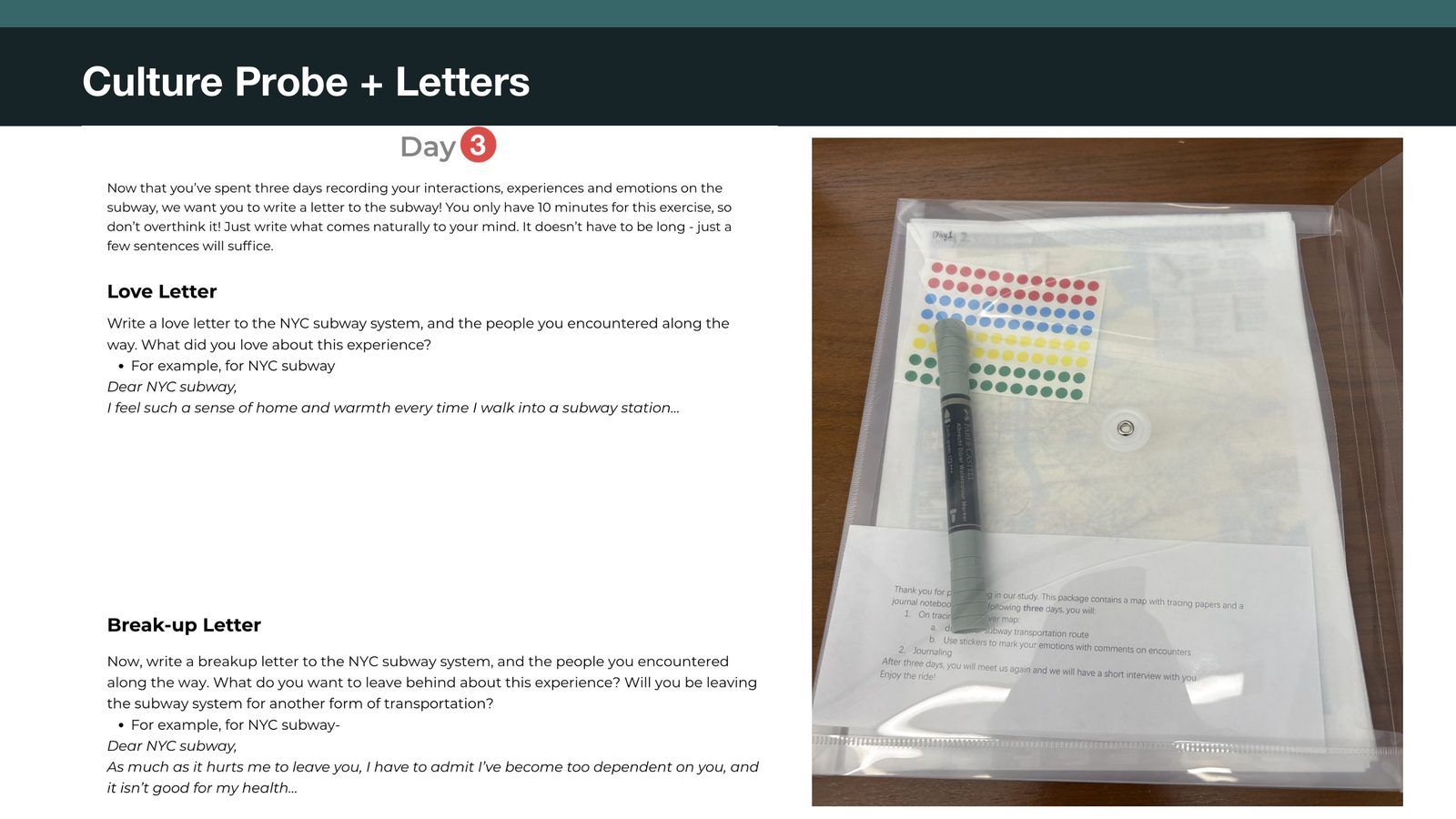
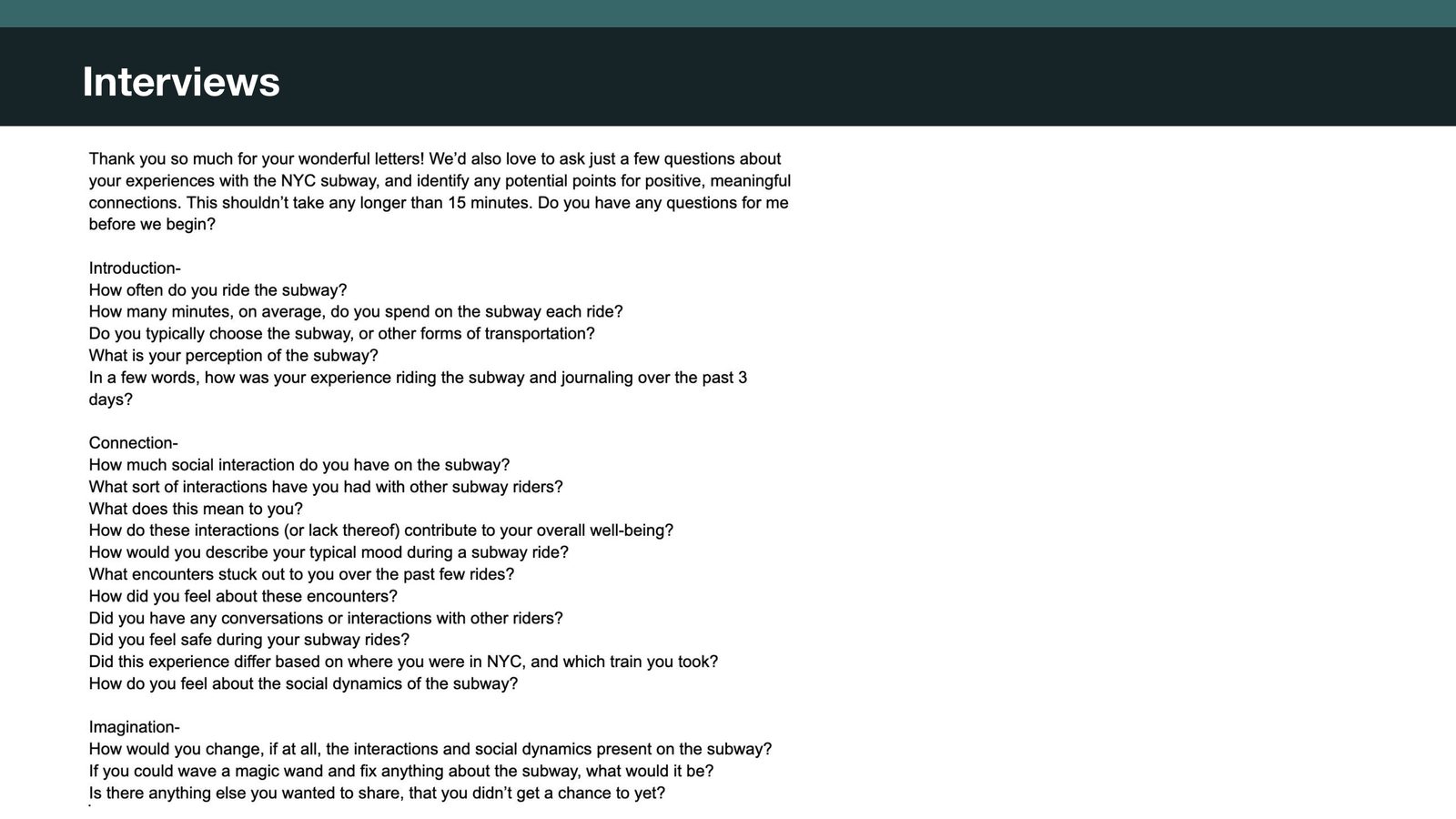
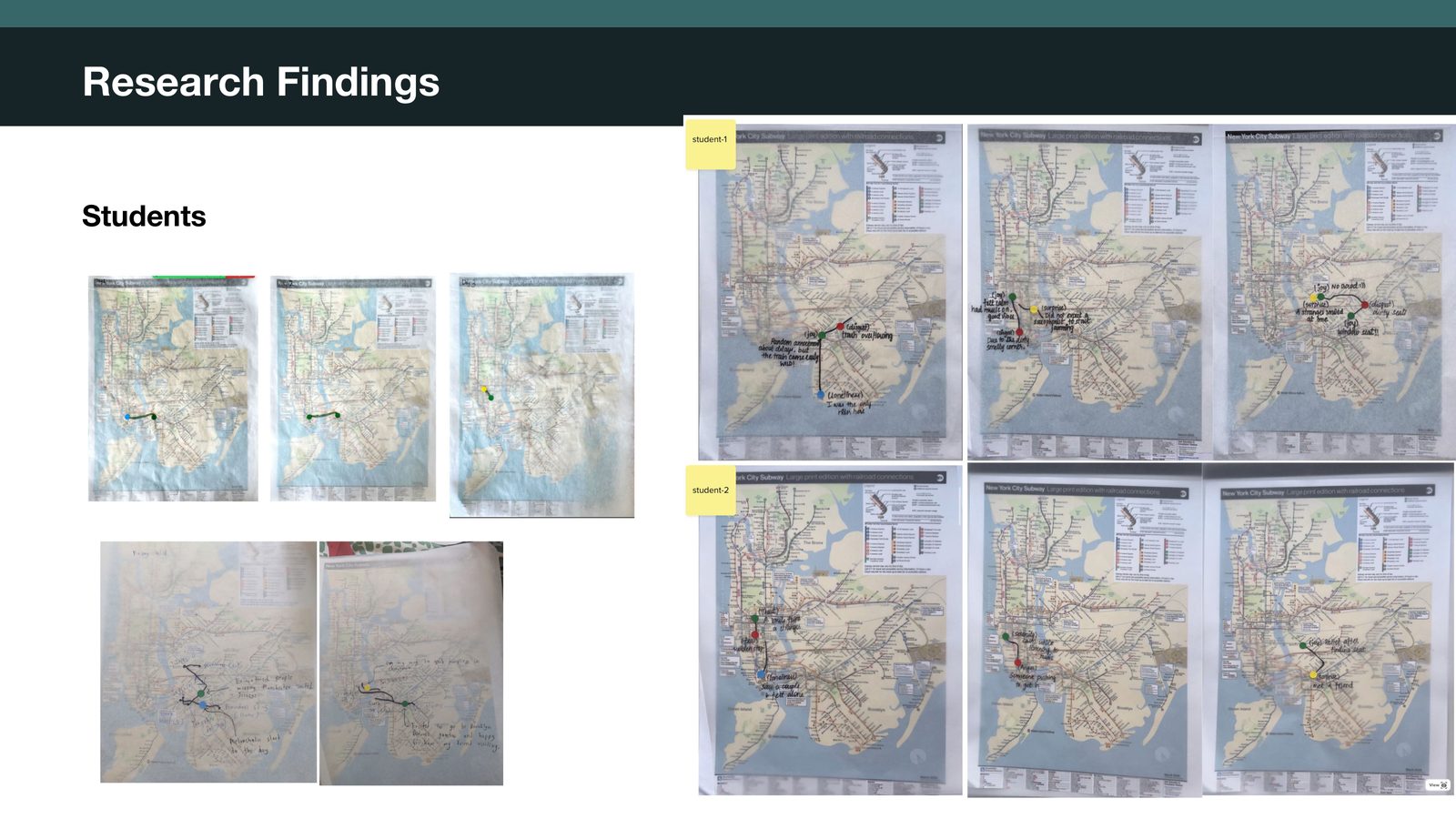
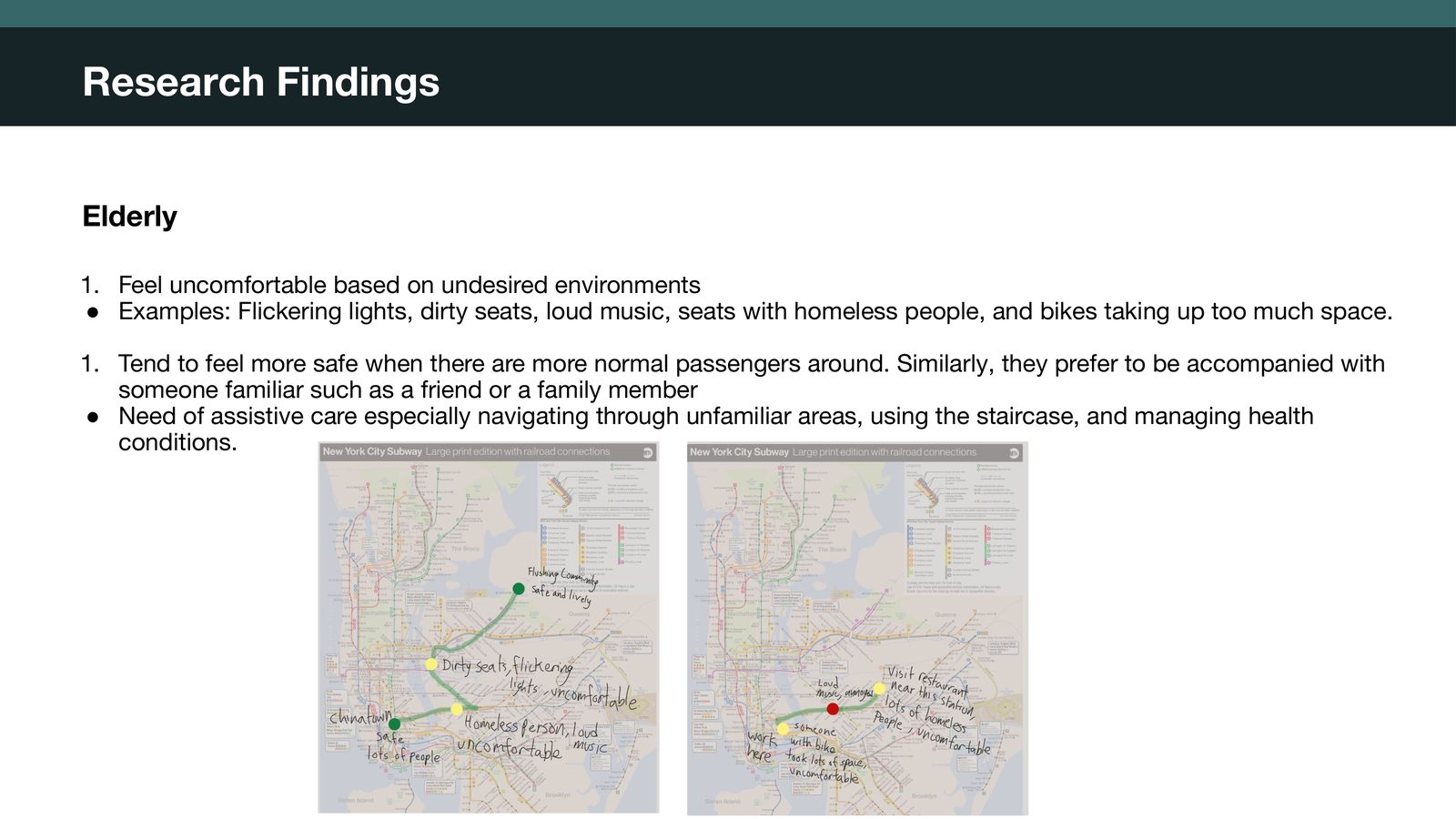
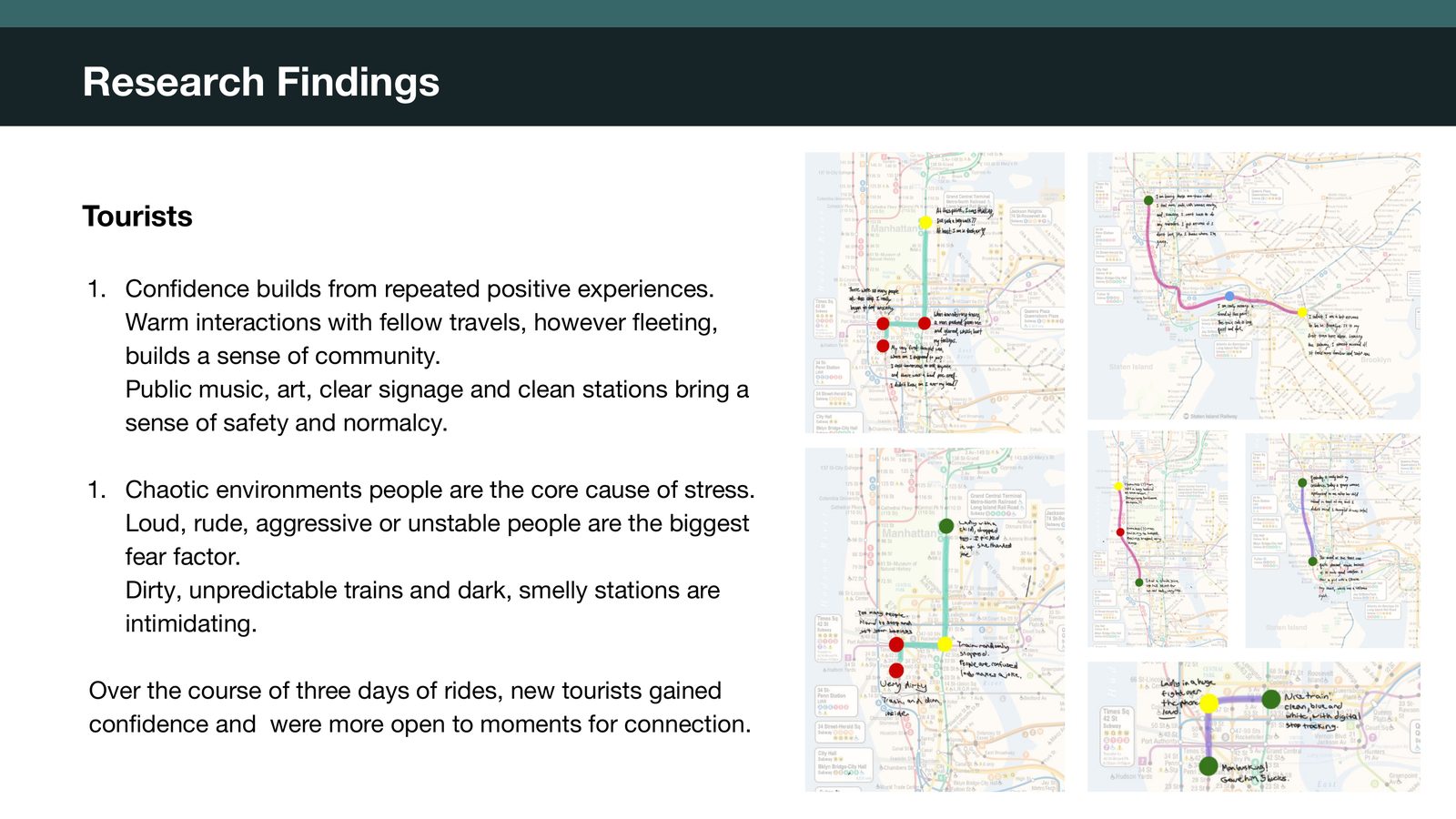
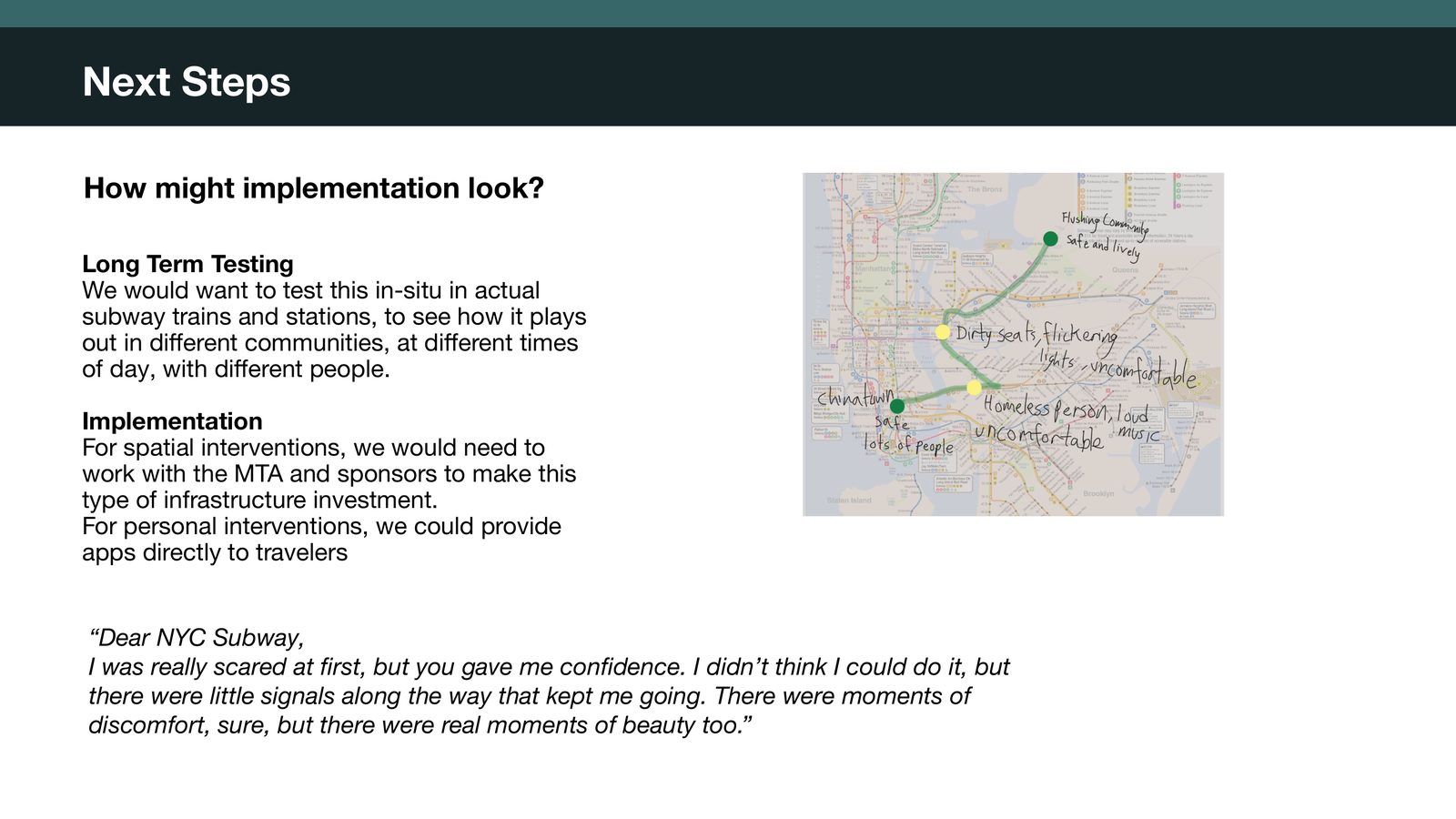
Methods and participants.Emotion map: riders traced their route on tracing paper and marked feelings with stickers.A 3-day journal about identity, culture, and commute habits.Journal prompts on space, social life, and identity.Day 3: a love letter and a break-up letter to the subway.Semi-structured interview guide.
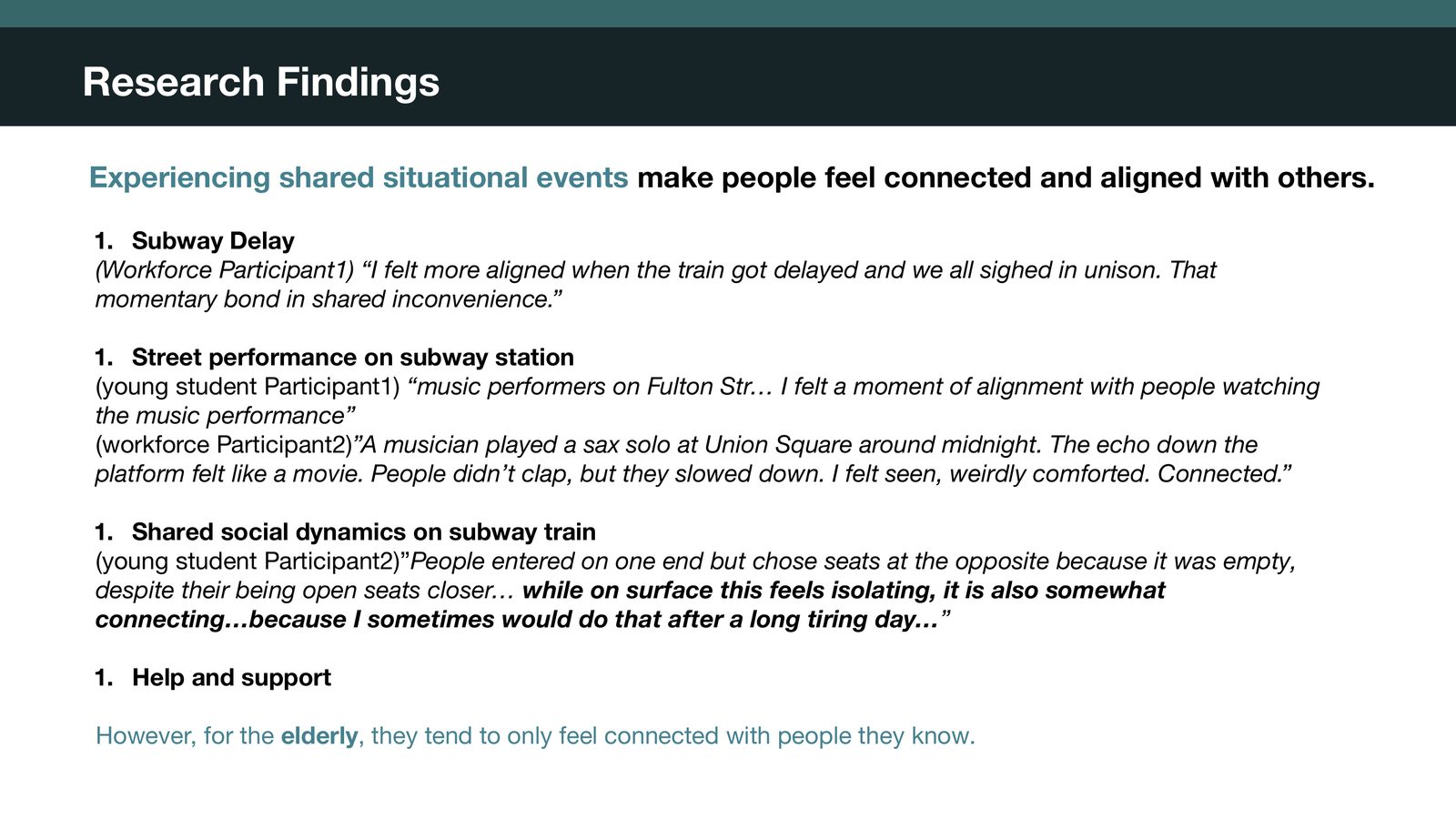
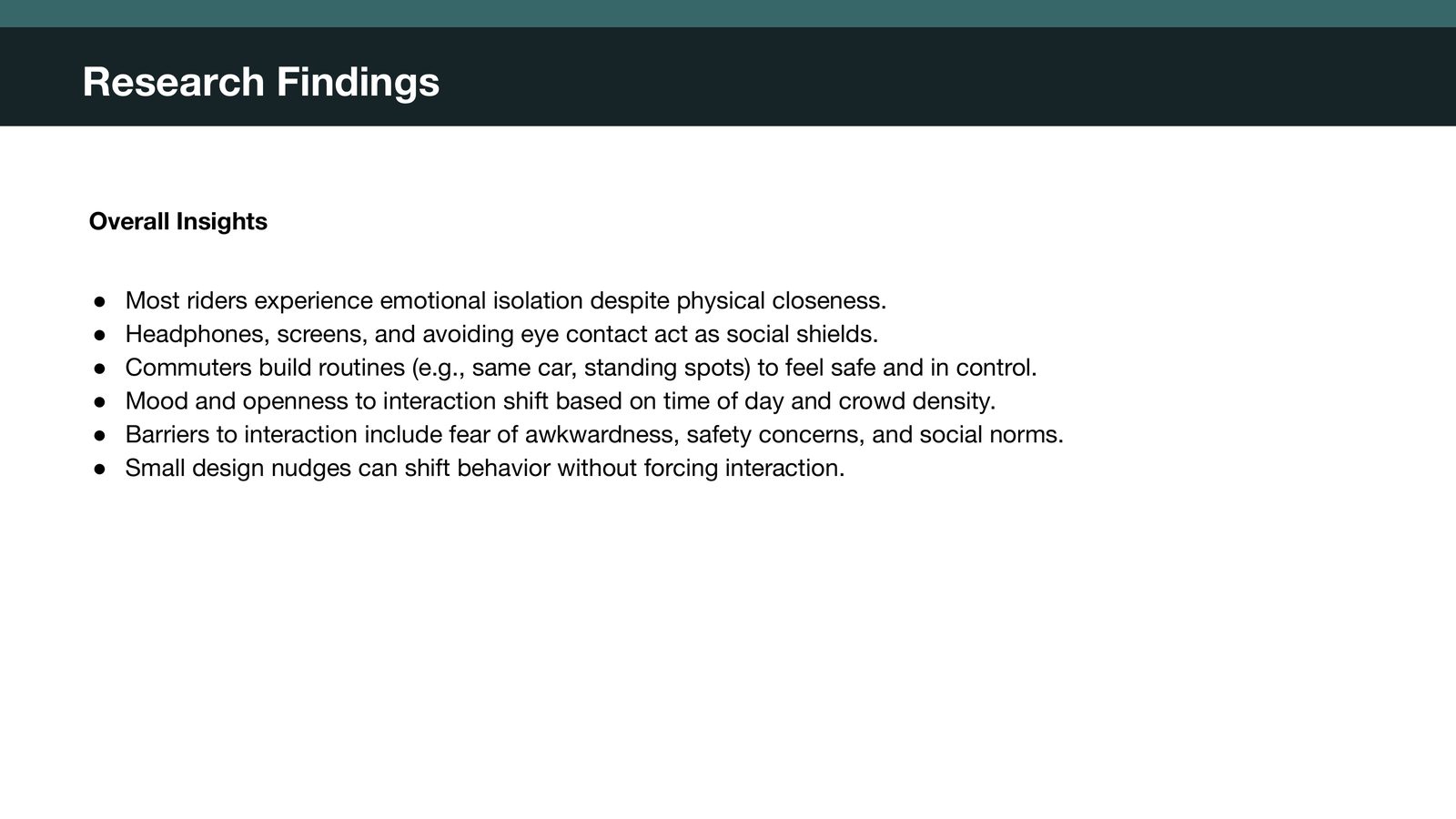
Riders feel emotionally isolated despite physical closeness. Headphones and screens act as social shields, but shared moments, like a delay or a busker, briefly make strangers feel aligned.
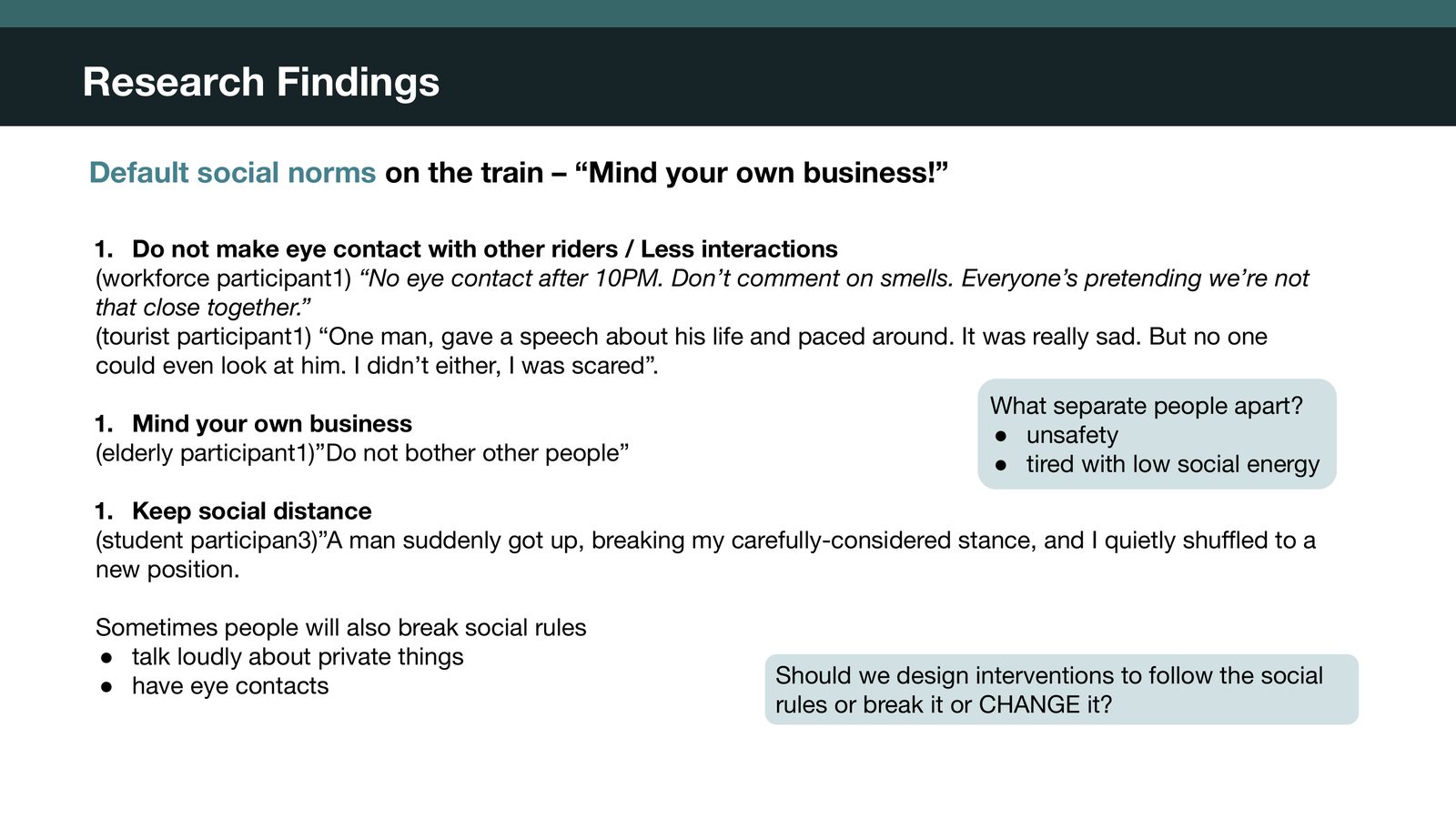
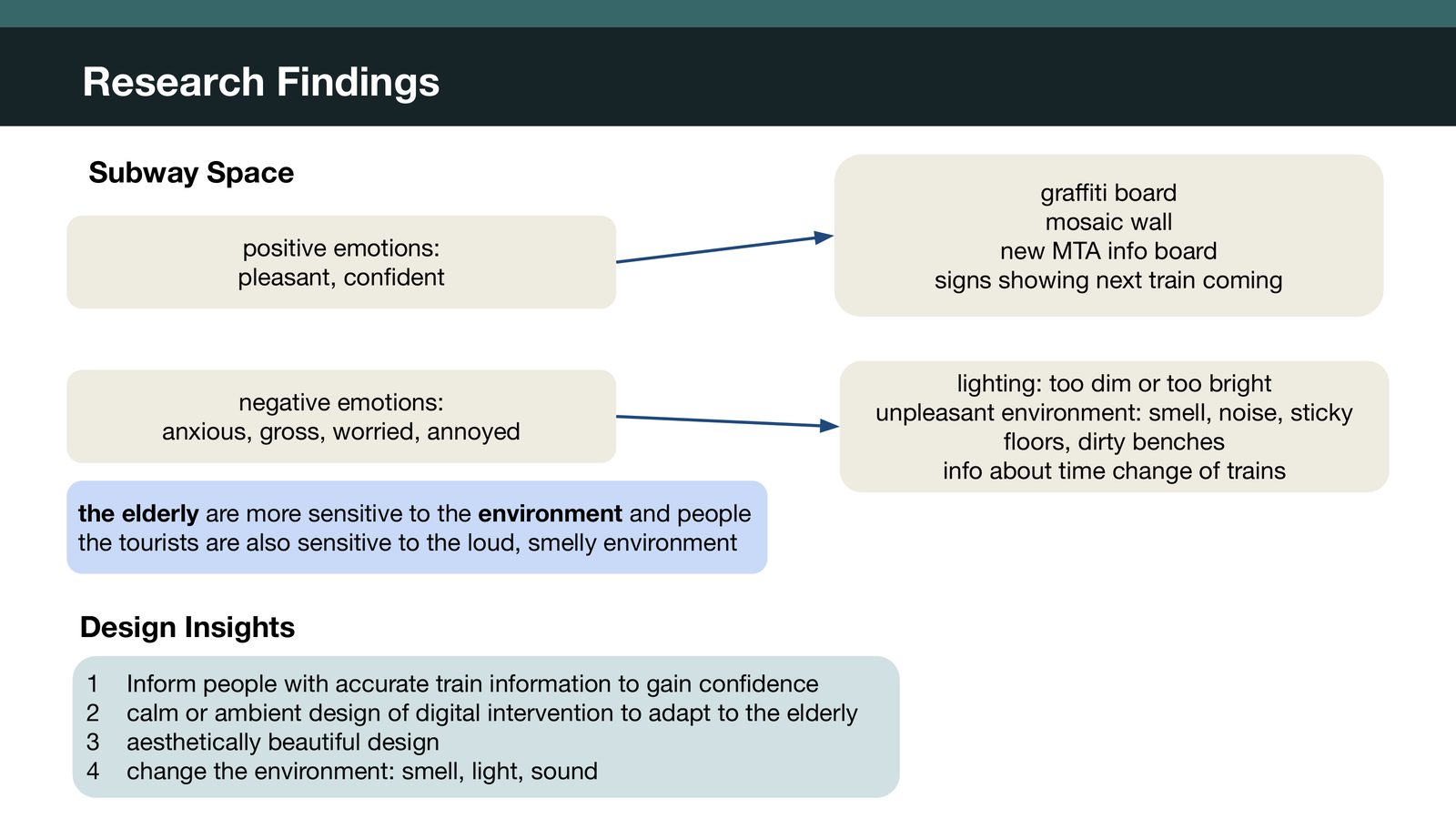
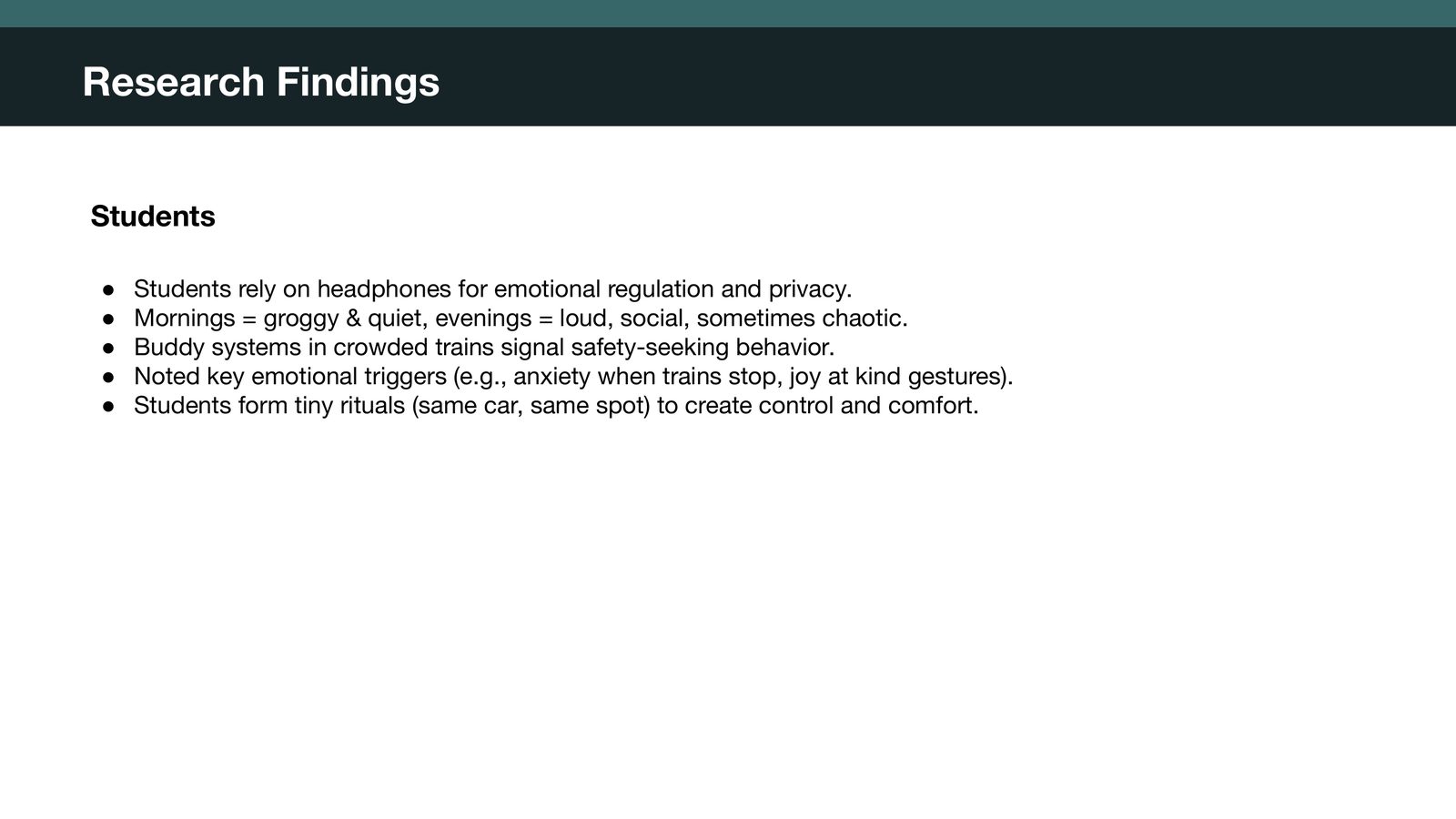
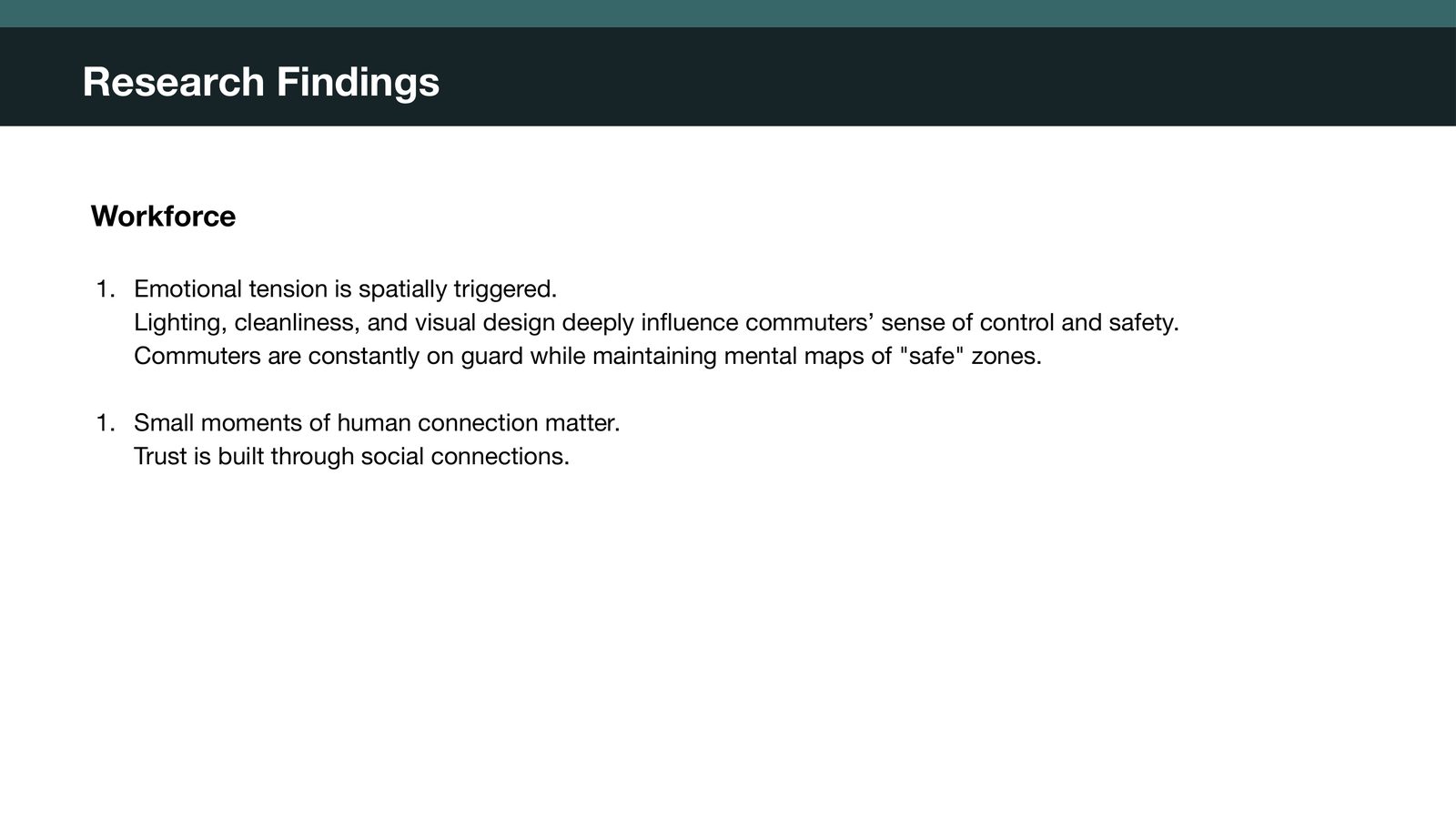
Shared situational events make people feel connected.The default norm: “Mind your own business.”How the station environment shapes emotion.Overall insights.Students’ emotion maps.Students: headphones for privacy, small rituals for control.Workforce: tension triggered by space; small human moments matter.Older riders: sensitive to environment, safer with company.Tourists: confidence grows from repeated positive experiences.
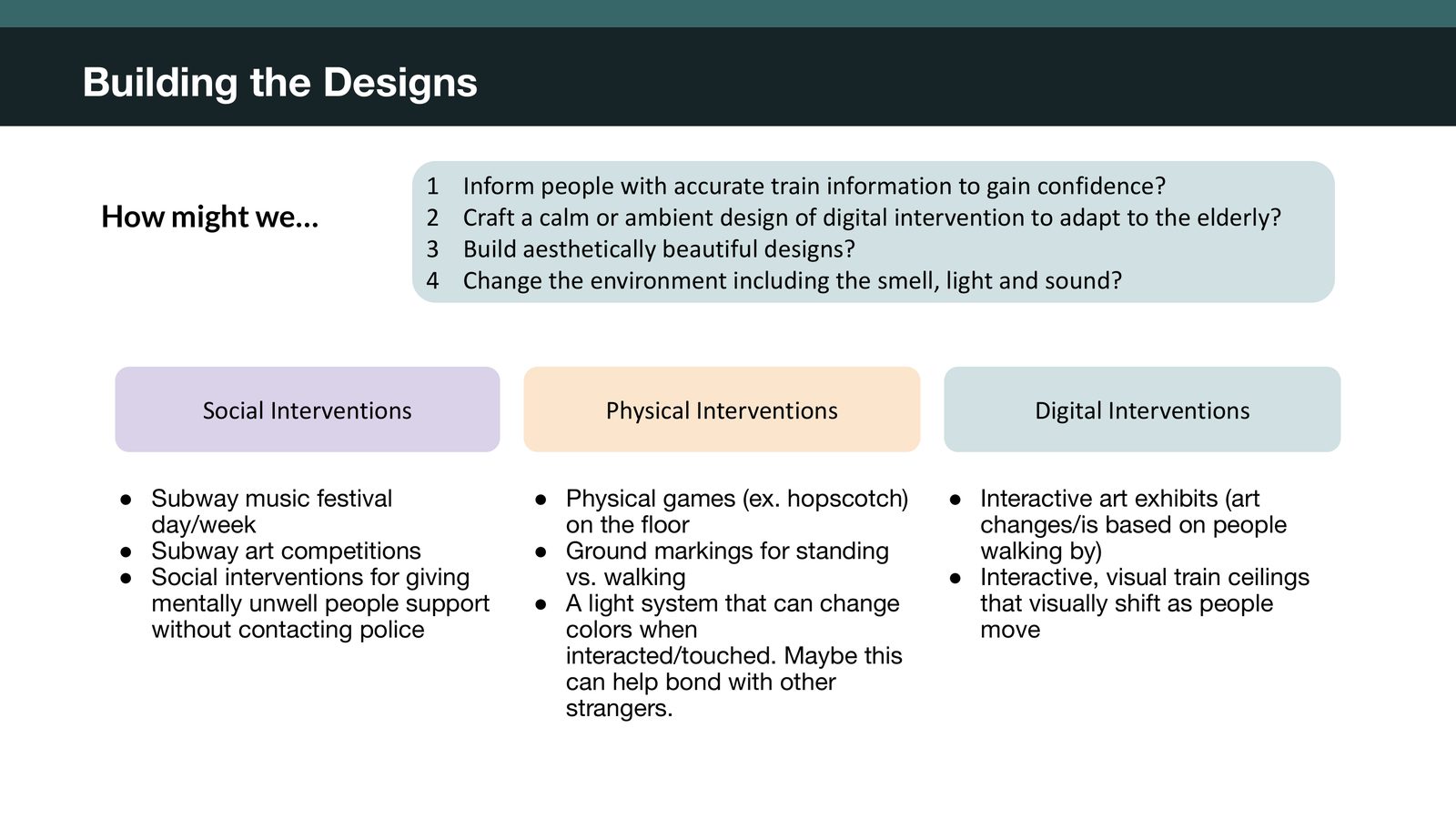
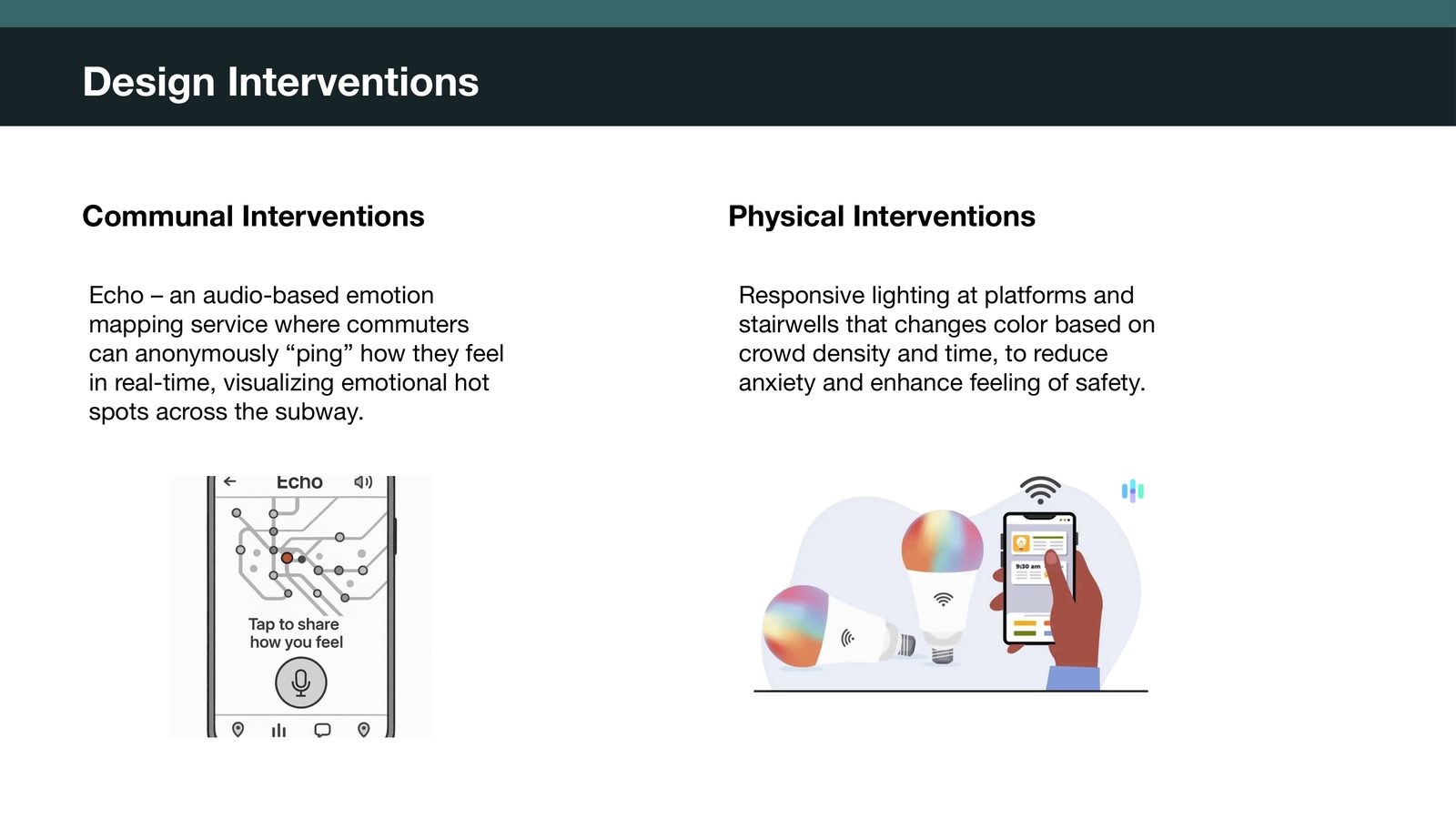
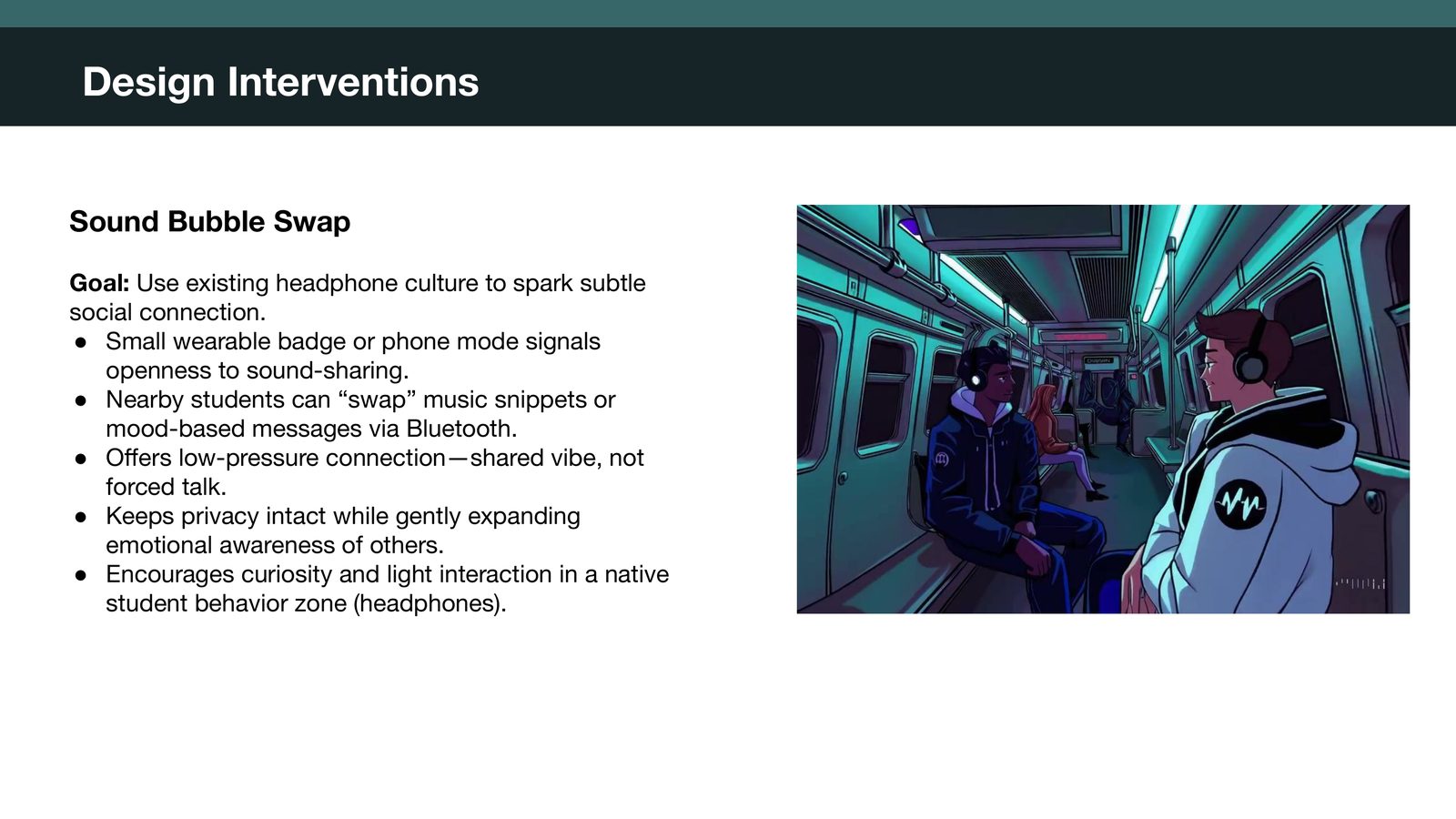
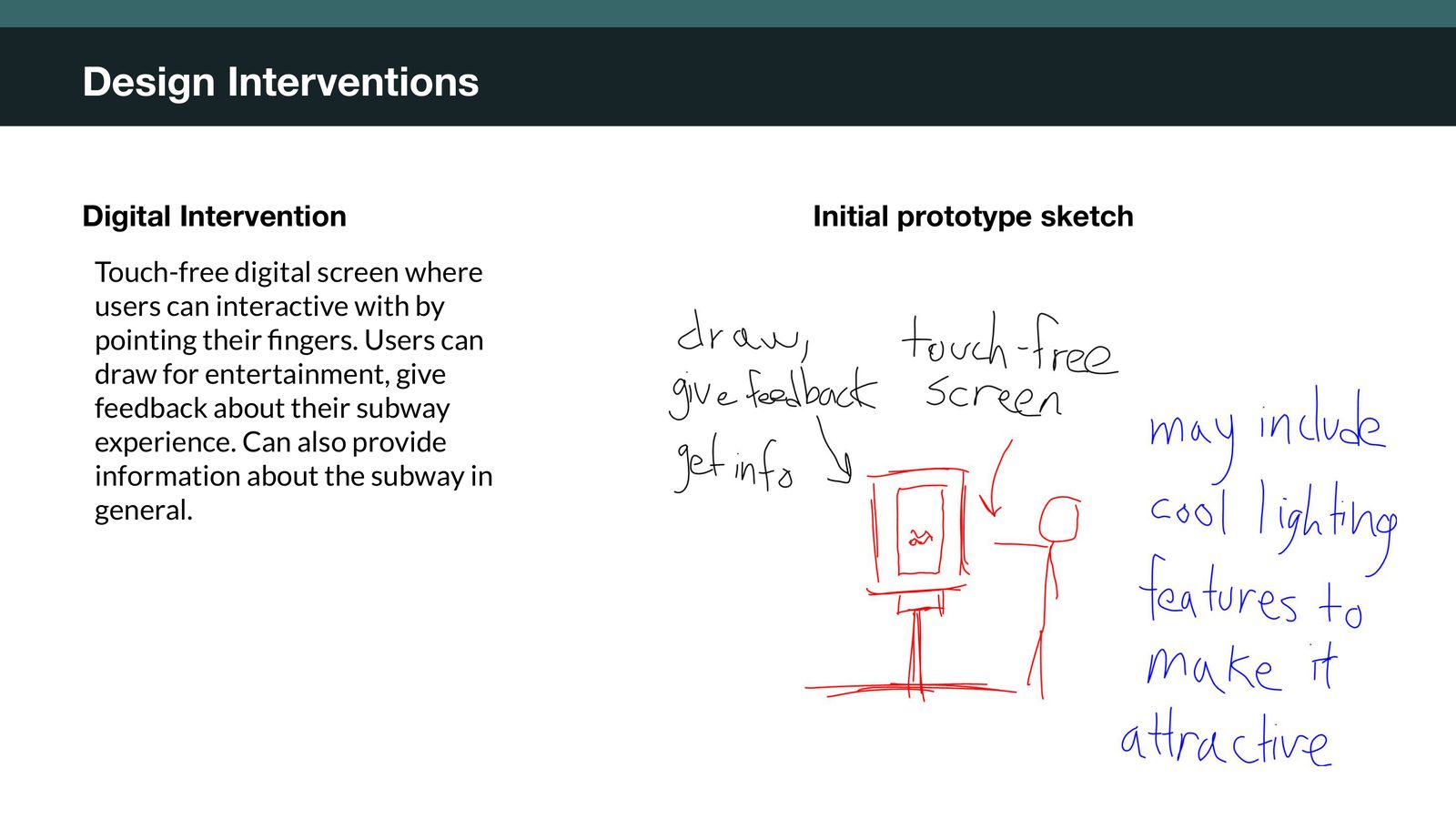
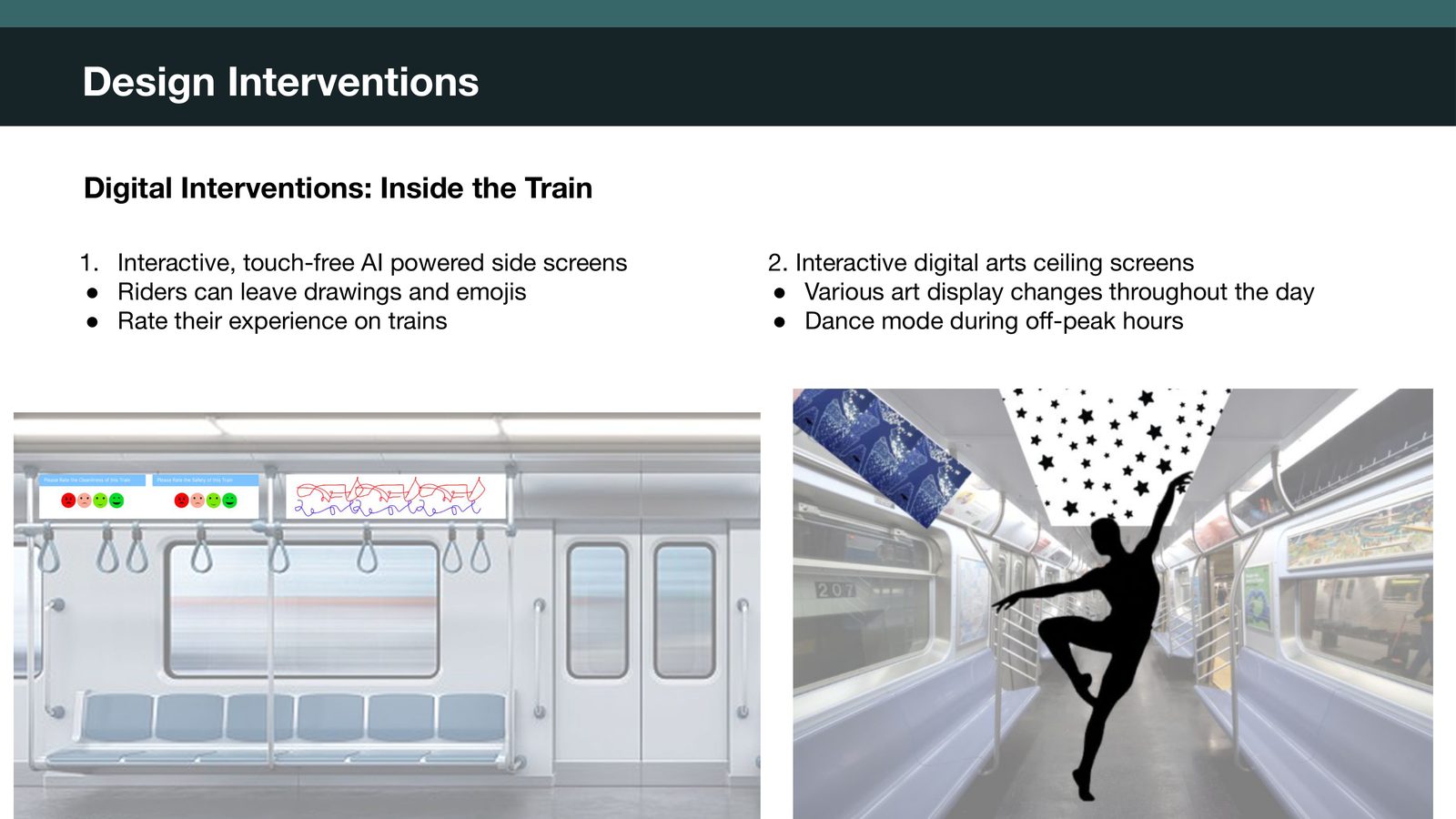
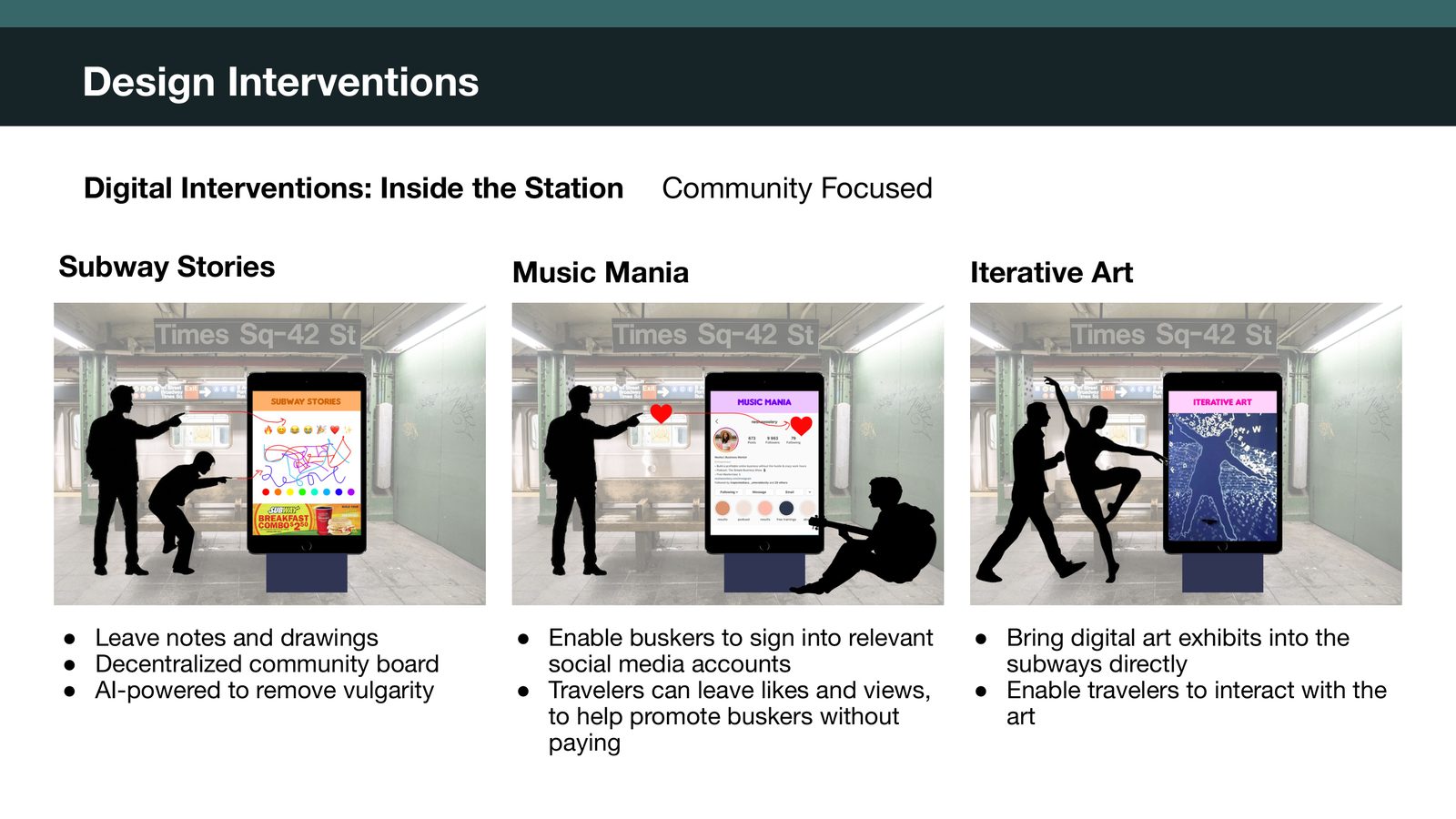
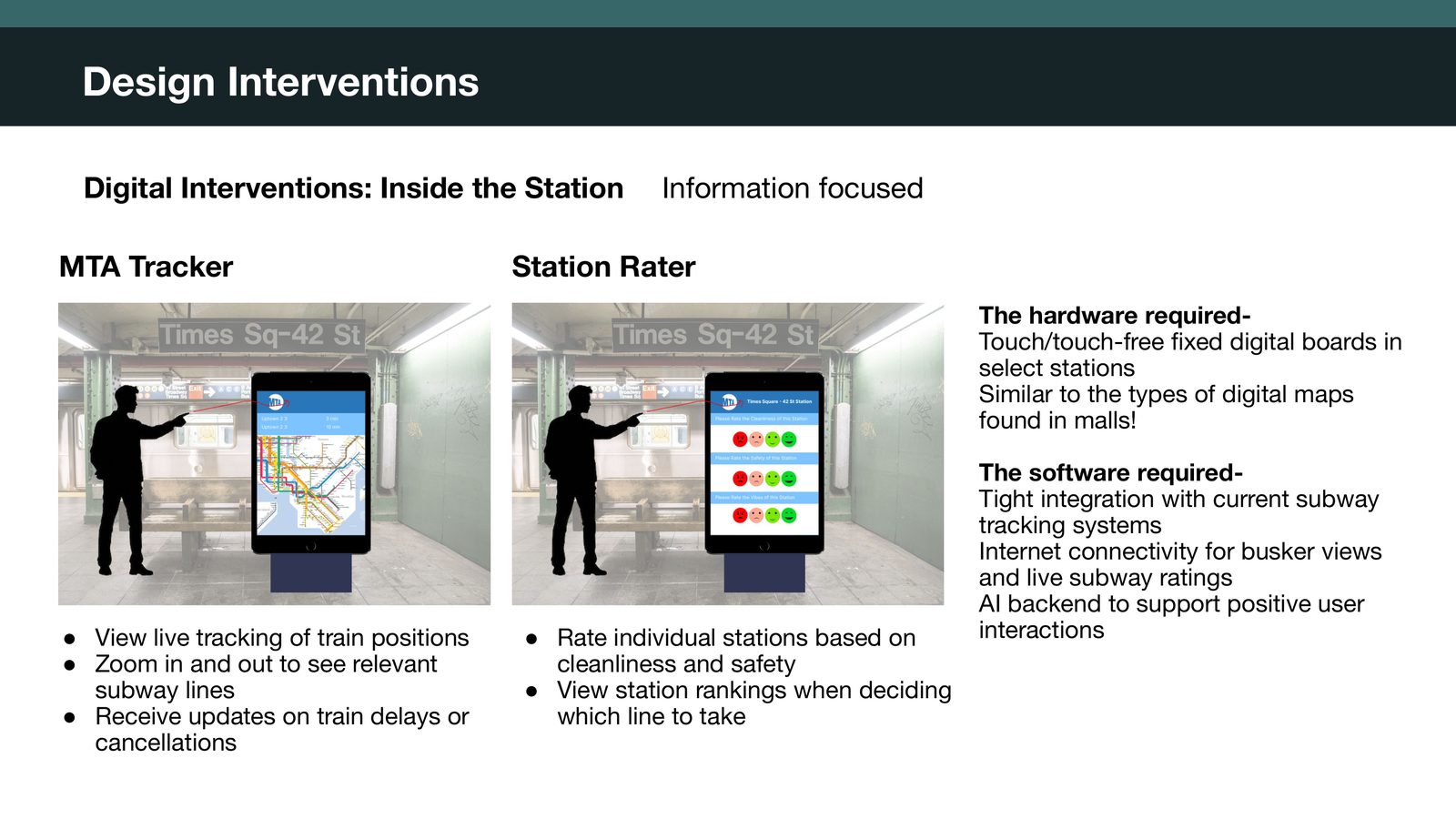
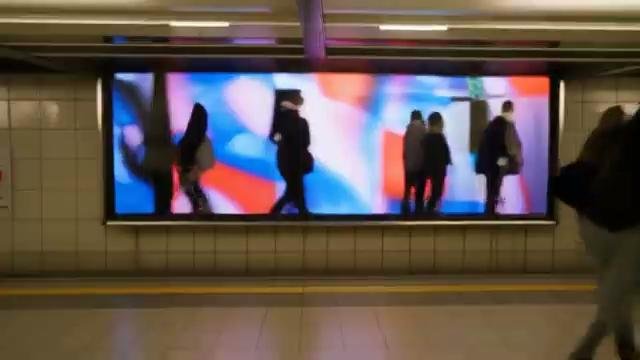
How might we…: social, physical, and digital interventions.Echo, anonymous emotion pings mapped across the system, and responsive platform lighting.Sound Bubble Swap: share music snippets with nearby riders, no forced talk.Touch-free screen: early prototype sketch.Inside the train: interactive side screens and art ceilings.In the station: Subway Stories board, Music Mania for buskers, Iterative Art.In the station: MTA Tracker and Station Rater.Still from our prototype video of a station screen.